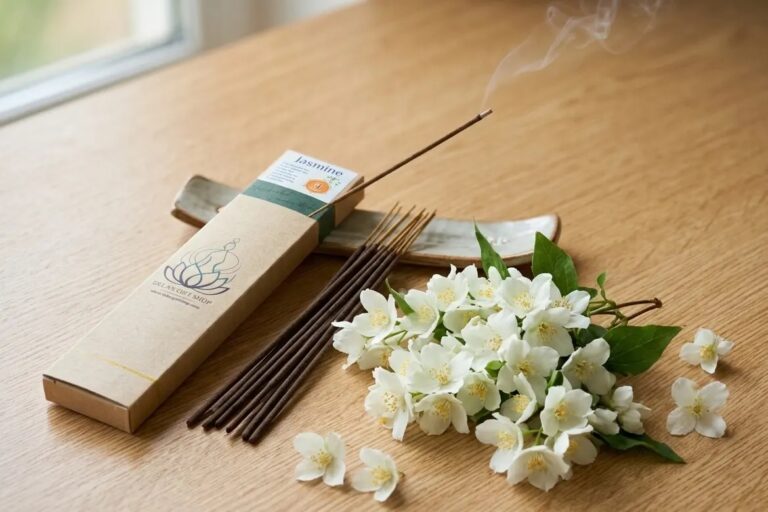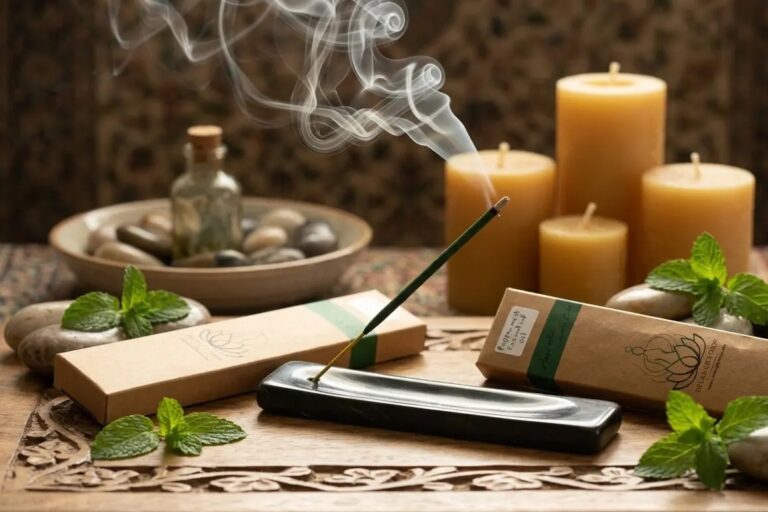

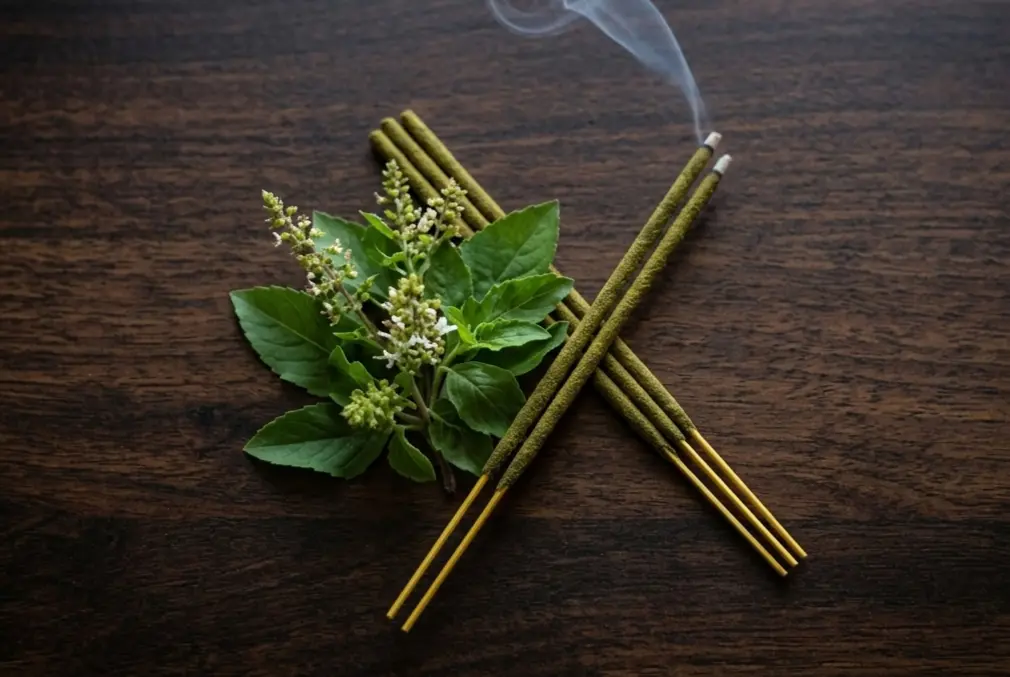
Incense has been shaping sacred spaces for thousands of years. And yet, in a market flooded with machine-made, synthetic-fragrance alternatives, finding one that’s truly made by hand has become rare. The handrolled tulsi incense stick is different. Not because of marketing, but because of what actually goes into it.
We’re going to explain the whole process at Dela’s Gift Shop. From how the tulsi is harvested to how you should be storing your sticks. Things most brands never tell you.
What Is a Handrolled Tulsi Incense Stick
The term gets used loosely. A lot of brands call their products handrolled when the core paste is machine-extruded and a human simply dips it at the end. That’s not the same thing.
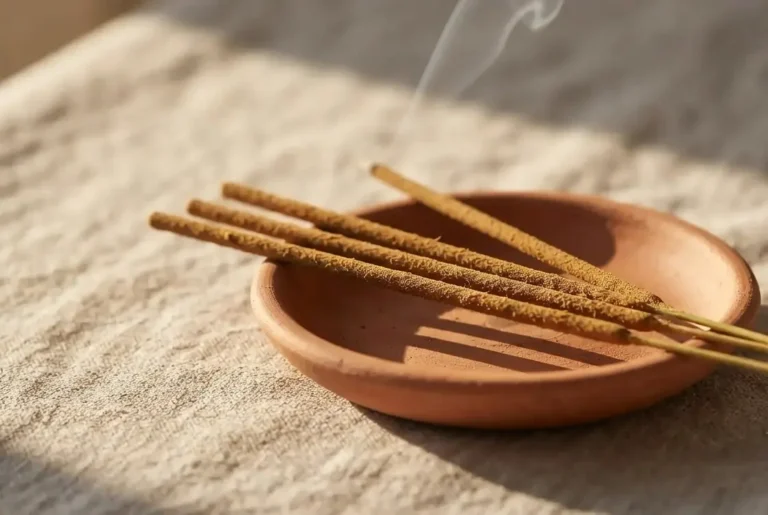
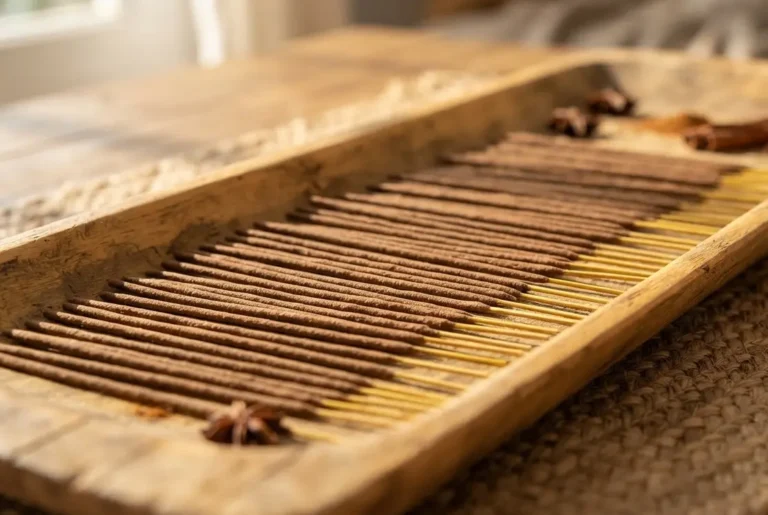
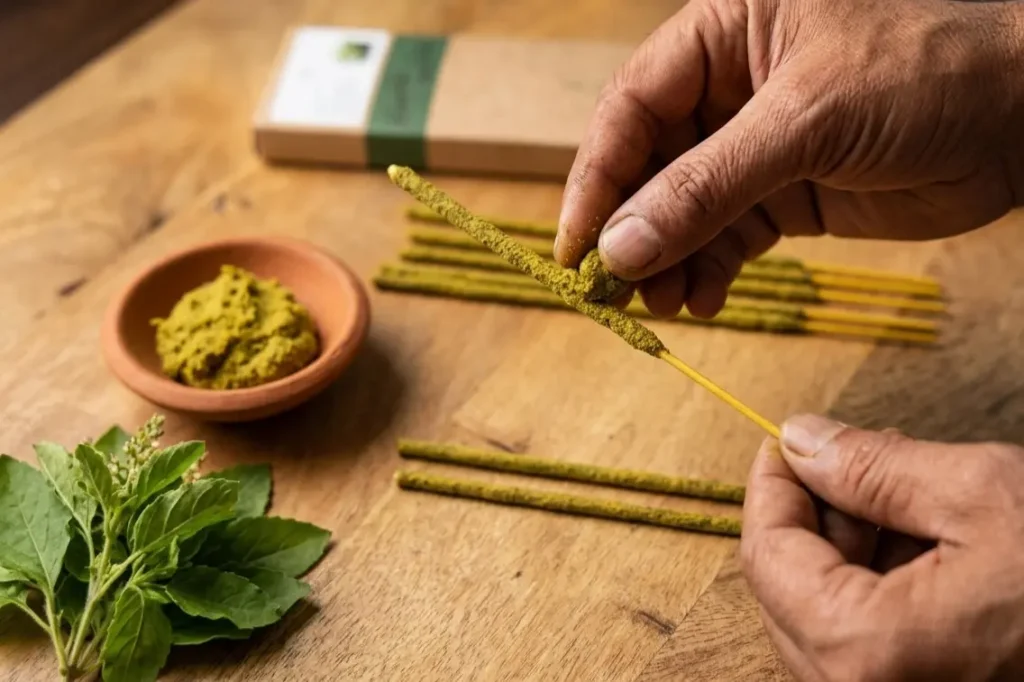
A genuine handrolled tulsi incense stick starts with natural tulsi material applied manually to a bamboo core. The artisan controls the coating thickness, the density of the herbal paste, and the finish. No machine can replicate the way a skilled hand senses whether a stick has the right weight and texture. That judgment comes from years of practice.
We use freshly cut tulsi leaves at Dela’s Gift Shop. Not imported powder of unknown origin. Actual leaves, dehydrated to lock in the essential oils before blending begins.
The Science Behind Tulsi (What Most Brands Don’t Tell You)
Here’s something surprising. Tulsi (Ocimum tenuiflorum) is one of the very few plants documented to release oxygen at night rather than carbon dioxide. Ancient traditions around leaving tulsi near sleeping areas or temple entrances weren’t just spiritual. They were, without knowing it, practically sound.
The plant contains eugenol, rosmarinic acid, and various flavonoids that give it documented antibacterial and adaptogenic properties. When you burn chemical free handmade tulsi incense sticks, those volatile compounds are activated and dispersed into the room air. The effect on the atmosphere is measurable, not just felt.
This is why premium incense sticks made with real tulsi smell so different from synthetic versions. The complexity of natural essential oil chemistry simply cannot be replicated in a lab fragrance blend.
Masala Method vs Direct-Coated Rolling: The Key Difference
Most consumers don’t know this distinction and most competitors don’t explain it. There are two main types of handrolled production:
Direct-coated rolling involves a bamboo stick dipped into a fragrance compound. Quick. Relatively cheap. The scent often dissipates fast because it’s a surface coating, not integrated into the stick body.
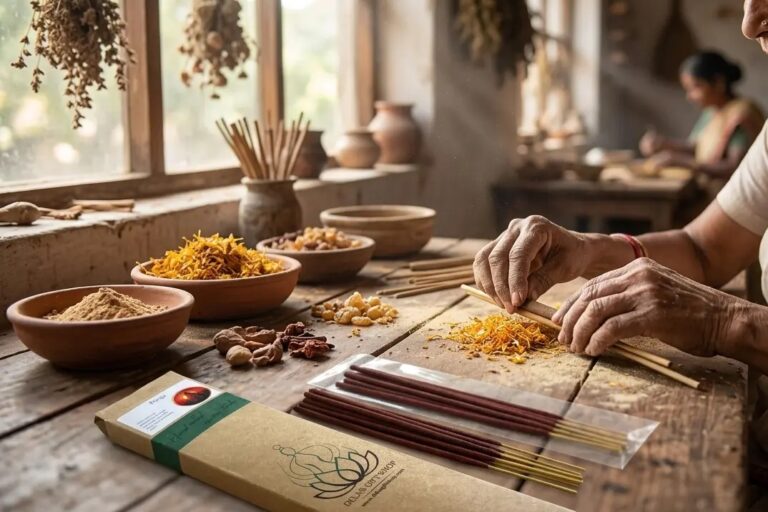
Masala method rolling is what natural handrolled incense sticks like ours are made with. The herbal blend is combined with natural binders into a paste and then physically hand-rolled onto the bamboo core. The fragrance is embedded throughout the stick. As it burns down, each layer releases aroma. This is why slow-burn quality differs so dramatically from one product to another.
When you notice an incense stick that smells equally strong in the first ten minutes and the last ten, that’s the masala method. The aroma builds as it burns rather than front-loading.
Step-by-Step: How We Make Our Handrolled Tulsi Incense Sticks
Step 1: Harvesting at Peak Potency
Fresh tulsi is selected when the plant’s essential oil concentration is highest. The leaves and stems are carefully sorted. Not all parts carry equal fragrance intensity, and a skilled harvest makes that distinction.
Step 2: Natural Dehydration
The tulsi is dehydrated slowly, without forced heat. Heat-blasting to speed up the process destroys the volatile oils responsible for the true herbal scent. Our organic incense sticks handmade process takes longer precisely because we don’t shortcut this step.
Step 3: Grinding and Blending
Dried tulsi is ground into a fine powder and blended with wood powder and plant-based natural binders. No synthetic adhesives. The ratio of each component affects how the stick burns, how evenly the fragrance releases, and how much smoke is produced.
Step 4: Hand Rolling
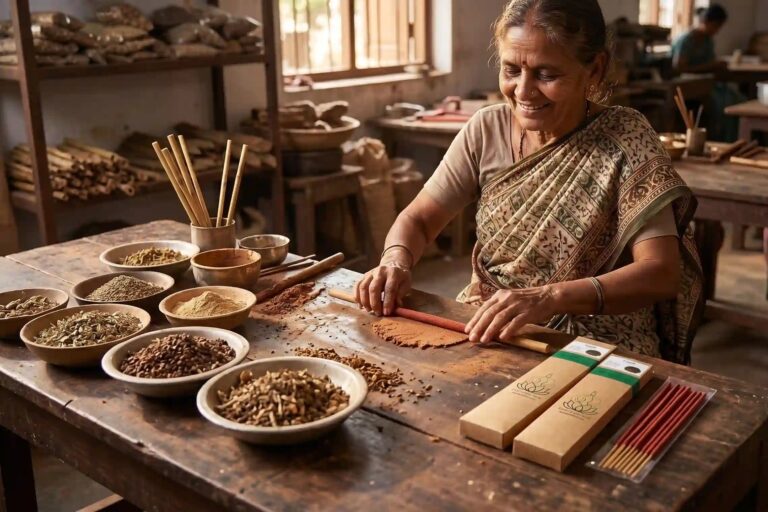
This is where the craft lives. Each stick is individually rolled by an artisan. The paste is pressed and smoothed onto the bamboo core from tip to base. The pressure applied determines density. Density determines burn time. This is not something a machine replicates well.
Step 5: Sun Drying
Finished sticks are laid in natural ventilation to dry. This can take several days. The patience involved in this stage is what gives each handmade incense sticks its integrity. A rushed dry produces a stick that burns unevenly or produces excess smoke.
Why Handmade Incense Sticks from Burn Better
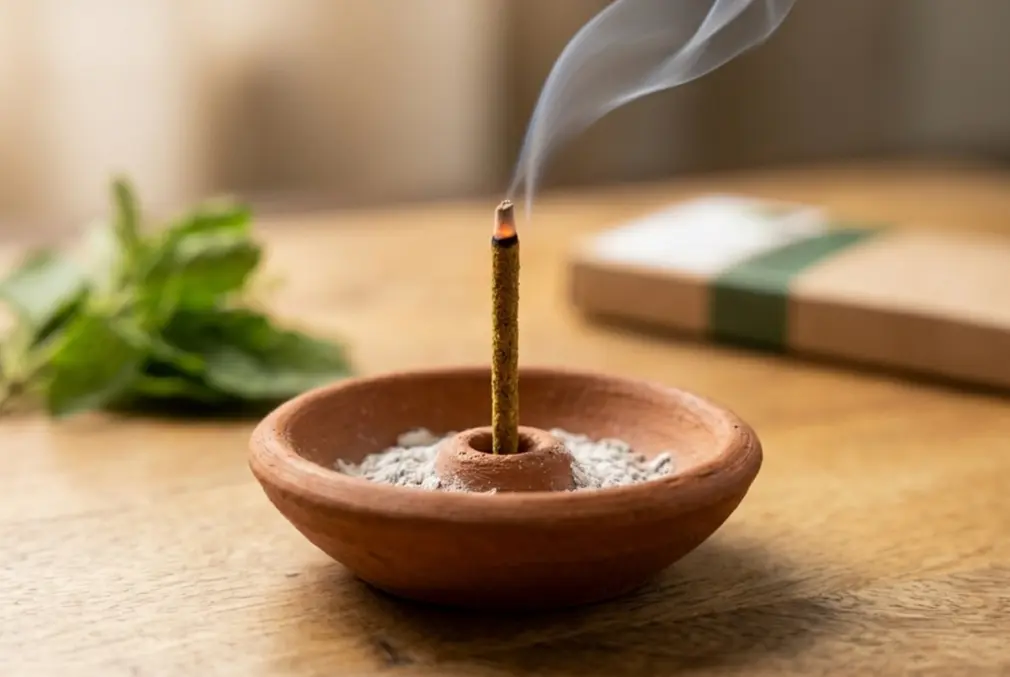
The burn of a handrolled tulsi incense stick is noticeably different from machine-made alternatives. Here is what actually happens:
Machine-extruded sticks often have inconsistent core density. The paste thins or thickens at different points. This creates uneven burn rates and fragrance bursts followed by flat patches. The smoke can be thick because synthetic binders combust differently from natural plant resins.
With genuinely handmade incense sticks produced using masala method, the burn is even because the artisan’s hand creates consistent pressure throughout. The smoke is thinner and cleaner because natural binders combust at lower temperatures without releasing irritating compounds. The fragrance does not spike and fade. It lifts slowly and lingers.
People who switch from mass-market incense to genuinely natural handrolled incense sticks often notice they no longer get headaches or irritated eyes. That’s not a coincidence. That’s chemistry.
How to Use Tulsi Incense for Pooja, Meditation, and Daily Rituals
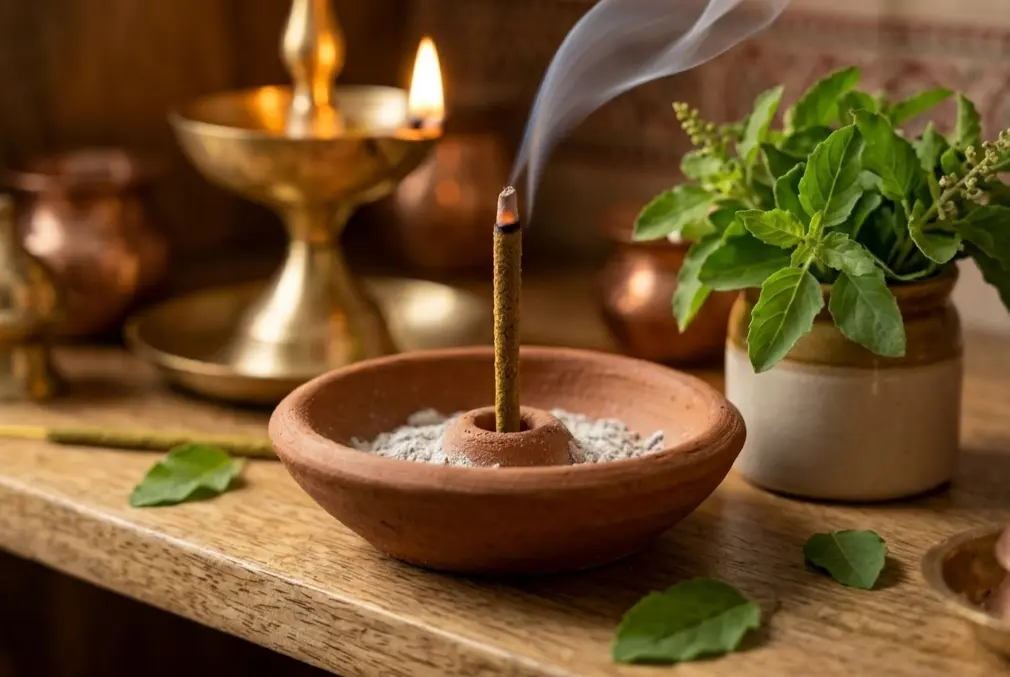
For Pooja
Light the stick a few minutes before you begin your ritual. Tulsi is considered auspicious and dear to Lord Vishnu in the Vaishnava tradition. The fragrance marks the transition from everyday activity to sacred time. Most pooja guides skip this entirely but the timing of lighting relative to ritual start matters. Let the aroma settle in the room before the prayer begins.
For Meditation
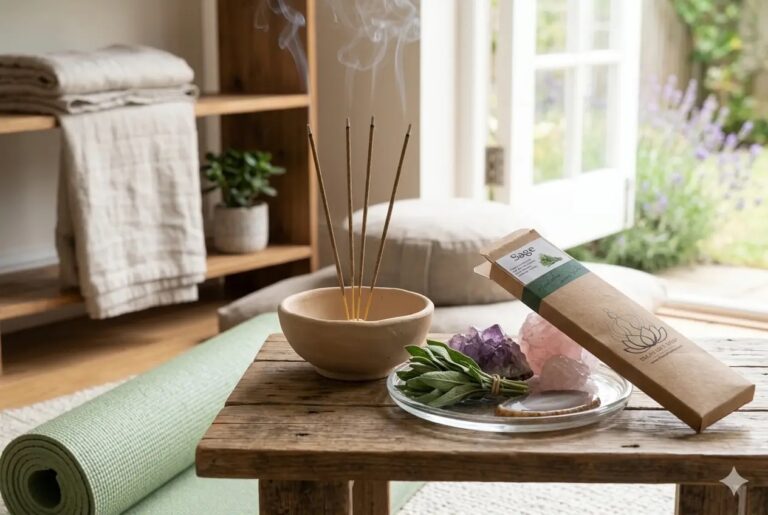
Place the stick in a holder at least two feet from where you sit. The idea is ambient fragrance, not direct inhalation. Over repeated sessions, your nervous system begins to associate the tulsi scent with a state of calm. This is a real conditioning effect. It’s why handmade tulsi incense sticks for pooja and meditation are often used at the same time of day, to reinforce the body’s natural transition into stillness.
For Everyday Use
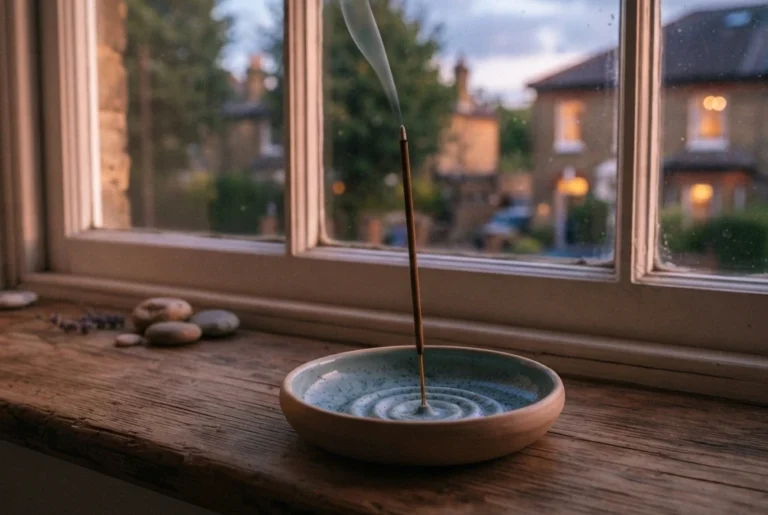
Morning is particularly well-suited. Before the household gets busy. A single stick during the first quiet window of the day creates a sensory anchor that many people describe as grounding. We light ours as the kettle boils.
How to Store Your Incense Sticks Correctly (Almost Nobody Covers This)
This is the content gap we haven’t seen addressed anywhere in the top competitors. And it genuinely affects your experience.
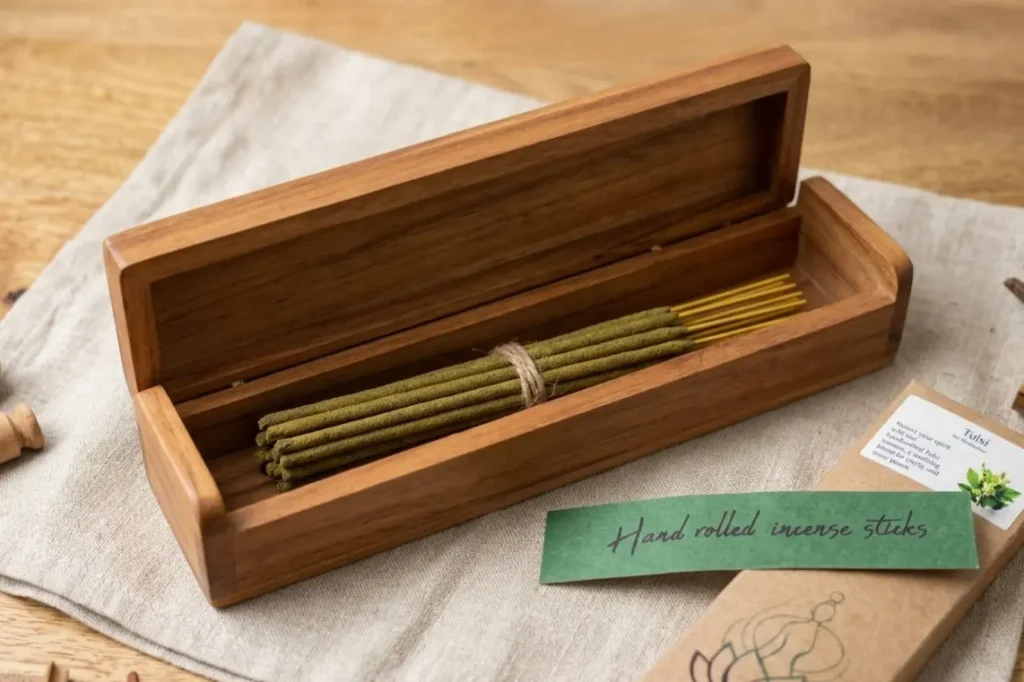
Avoid plastic packaging for long-term storage. It creates condensation which degrades the natural herbal content over time.
Keep them away from direct sunlight. UV exposure breaks down essential oils faster than most people expect. A dark drawer or wooden box is ideal.
Do not store near strong odours. Incense absorbs ambient fragrance. Storing organic incense sticks handmade near perfumes, cleaning products or spice racks will alter their scent profile.
Keep them horizontal, not upright. Stored vertically for long periods, the herbal paste can develop microscopic cracks from gravity, which affects even burning.
Proper storage can extend the aroma quality of your sticks from months to well over a year.
Why Choose Dela’s Gift Shop
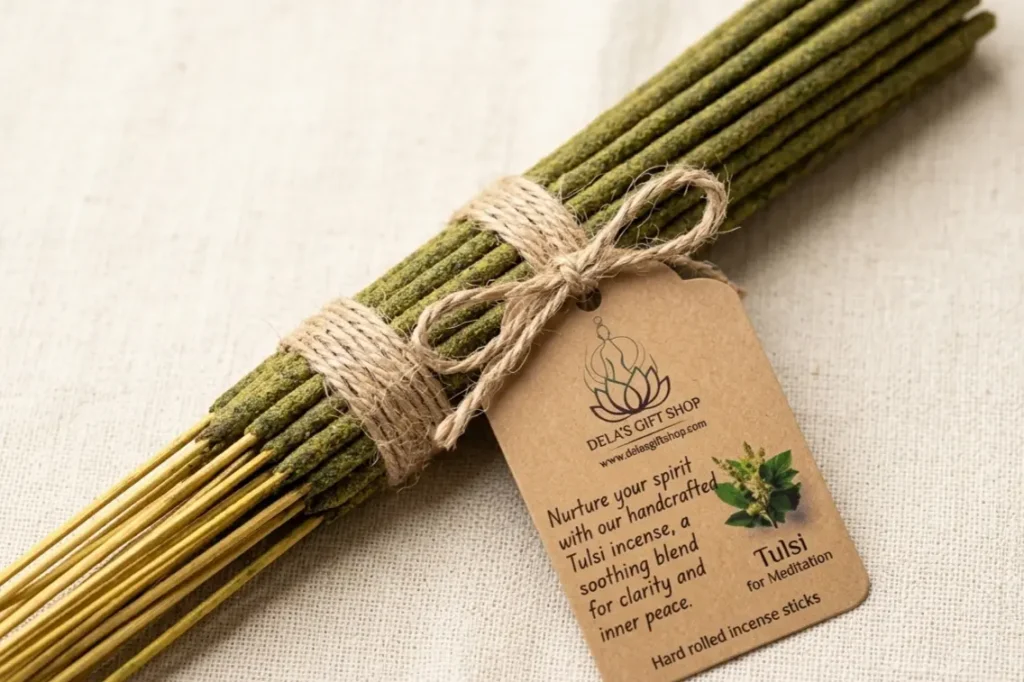
We work with artisans who’ve been rolling incense using traditional methods for generations. At Dela’s Gift Shop, we don’t source from bulk warehouses or repackage generic sticks with a different label. The tulsi is real. The process is the one described in this blog. The result is a handrolled tulsi incense stick that does what it says.
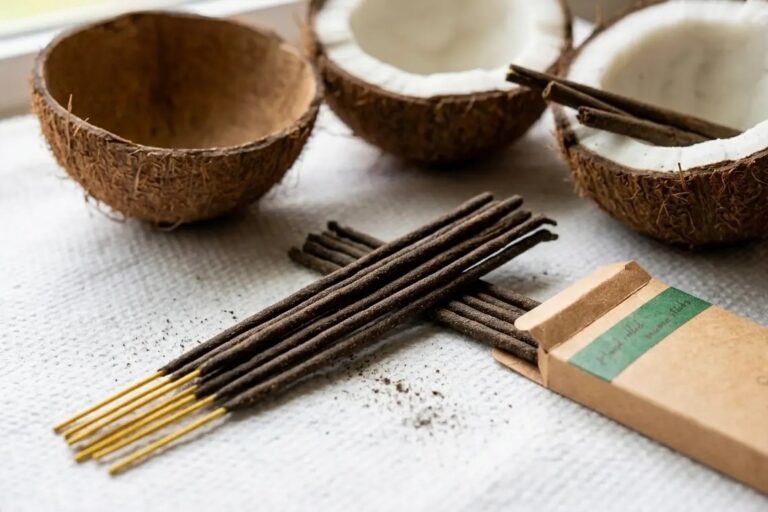
Our premium incense sticks collection also includes other handmade incense sticks varieties — sandalwood, rose, ylang ylang, coconut, and more — all made using the same natural handrolling process. Browse the full incense sticks collection at Dela’s Gift Shop or explore all our featured handmade products if you’d like to see what else we make with the same level of care.
We also ship across the United Kingdom with free delivery available.
FAQs
What is a handrolled tulsi incense stick?
A handrolled tulsi incense stick is an incense product made by pressing a natural tulsi-based herbal paste manually onto a bamboo core, without machine extrusion. The result is a denser, more evenly burning stick with a more complex and authentic fragrance than mass-produced alternatives.
Are tulsi incense sticks good for daily use?
Yes. Because genuine chemical free handmade tulsi incense sticks use no synthetic binders or artificial fragrance compounds, they produce cleaner smoke and are safe for regular indoor use in a ventilated space. Many practitioners use them daily for morning rituals, pooja, or meditation.
What is the difference between masala incense and regular incense sticks?
Masala-method sticks have the herbal blend integrated throughout the body of the stick. Regular or direct-dipped sticks carry fragrance only on the outer surface. Masala produces a more consistent burn with fragrance that builds gradually. Most natural handrolled incense sticks of quality use some version of the masala method.
How long does a handrolled tulsi incense stick burn?
A properly made handrolled tulsi incense stick using masala method typically burns between 45 to 60 minutes. Burn time depends on stick thickness, density, and ventilation. Thinner sticks in drafty rooms burn faster. Ours are formulated for slow burn, closer to the 60-minute range.
Why does my incense stick go out before it finishes?
This is almost always a storage or quality issue. If the stick has absorbed moisture from improper storage, the natural binders soften and the burn becomes inconsistent. Keep your organic incense sticks handmade in a sealed, dry, dark container. If a stick extinguishes, gently re-light it. A quality stick should not require more than one relight in normal conditions.
Your Ritual Deserves the Real Thing
Most of what’s sold as incense today is a shortcut. Machine-made, synthetic-fragrance, fast-burn sticks that smell sharp for two minutes and leave residue that irritates your lungs.
We made a different choice at Dela’s Gift Shop. And if you’ve read this far, you probably understand why that matters.
Explore our handrolled tulsi incense stick and our full range of handmade incense sticks at delasgiftshop.com. You can also browse the complete incense sticks range directly here and see the other hand-rolled varieties crafted with the same process.
Natural. Slow-burning. Made by hand. Exactly as it should be.