
Written by the team at Dela’s Gift Shop. We’ve been sourcing, rolling and burning natural incense long enough to know the difference between what’s real and what’s marketing.
Incense is one of those things people reach for without fully knowing why. You smell something in a market, a temple, a friend’s living room and something shifts. You feel it before you understand it. We’ve experienced that moment ourselves, and it’s why we started paying close attention to which plants actually do something. Tulsi is near the top of that list.
Most blogs covering tulsi incense sticks benefits give you a surface-level list: it’s spiritual, it purifies air, it smells nice. That’s not wrong. But it’s not the full picture. This piece goes deeper. The science behind why it works, the parts other guides skip, and what to actually look for when you buy.
What Tulsi Actually Is and Why the Plant Form Matters for Incense
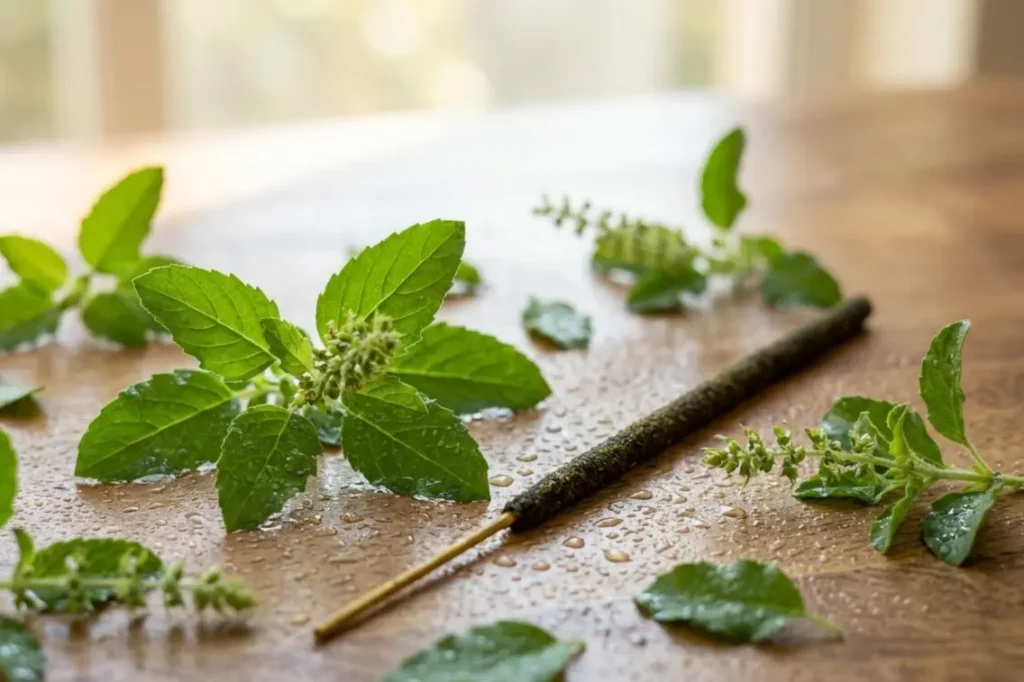
Tulsi goes by the scientific name Ocimum sanctum or Ocimum tenuiflorum. It belongs to the mint family and grows across tropical and subtropical Asia. Ayurveda calls it the Queen of Herbs and the elixir of life. Neither title is hype. The plant contains a specific cluster of bioactive compounds: eugenol, ursolic acid, rosmarinic acid and carvacrol. These compounds are why tulsi has a 5,000-year track record.
Here’s what most guides miss: these compounds behave differently depending on how you consume them. Oral consumption through tea or capsules delivers them through the digestive system. But when you burn tulsi incense sticks, eugenol and related molecules become volatile. They vaporise and enter your body through the olfactory system. That means they travel a direct neural path to your limbic brain. The emotional processing centre. The stress response hub. This is not a metaphor. This is neurochemistry, and it changes the entire conversation about what burning incense actually does.
The Spiritual Importance of Tulsi
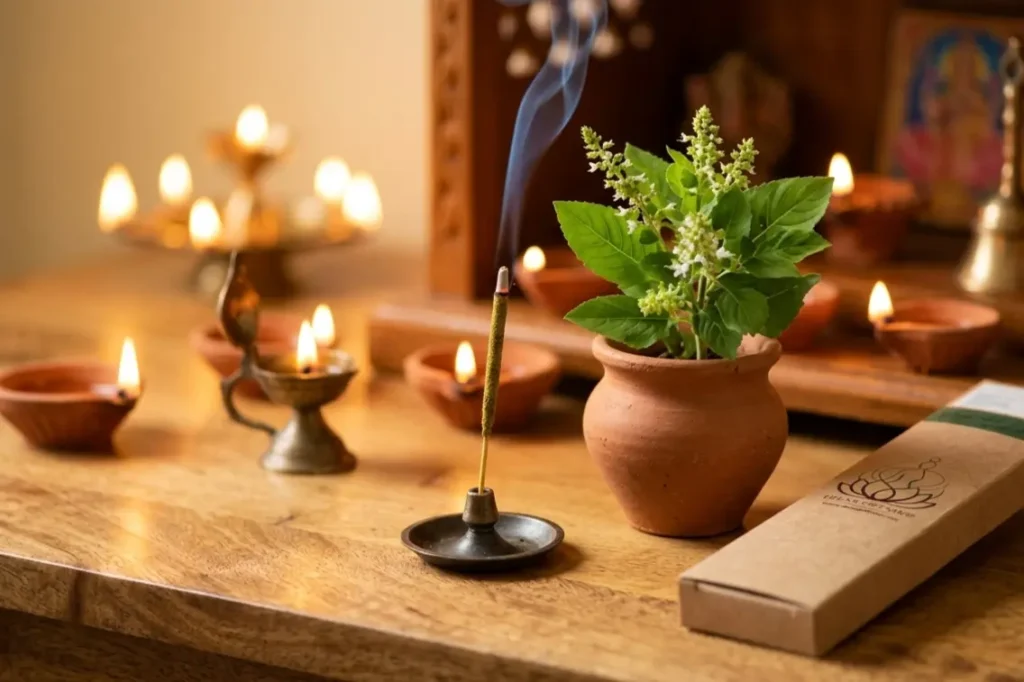
Walk through a traditional Hindu home at dawn and you’ll see it before you hear anything else. A small flame near the courtyard tulsi plant. An incense stick settled in its holder. A moment of stillness before the day starts. This isn’t decoration or habit. It’s the oldest form of intentional space-setting we know.
In Hindu scripture, tulsi is not merely a herb associated with the divine. She is divine. The Puranas describe Brahma residing in the plant’s branches, the Vedas in its lower stems, and the Ganges flowing through its roots. Every part is sacred. In practice, this means tulsi’s presence in a home is understood to invite protection, clarity and positive energy.
The spiritual benefits of tulsi incense aren’t a modern wellness invention. They are continuous with thousands of years of lived experience. In India, tulsi incense has been burned during illness recovery, at life transitions, during grief and in preparation for meditation. Not as decoration but as active support.
The smoke is understood as a bridge. Between the ordinary and the sacred. Between distraction and presence.
Tulsi and Lord Krishna: More Than Symbolism
This is the angle almost no competitor covers. And it matters enough to address clearly.
Tulsi’s connection to Lord Krishna is not incidental. In Vaishnava tradition, the devotional school centred on Vishnu and Krishna, no act of worship is considered complete without the presence of tulsi, whether as a leaf offering, a garland or fragrant smoke. The 108-bead japa mala used to count mantras is traditionally carved from tulsi wood. The plant is that embedded in devotional practice.
During the Kartik month, which falls in October to November and is considered one of the most sacred periods in the Hindu calendar, tulsi incense is burned almost continuously in devout homes. The intention is not merely ritual. It’s believed to establish and maintain a spiritually elevated environment throughout the month.
When you understand this context, the act of lighting a stick shifts. You’re not just filling a room with fragrance. You’re engaging with a tradition that has been continuously practiced for millennia by billions of people who found it worth keeping.
Mental Health and the Cortisol Connection
We want to be clear about what the research says and what it doesn’t.
Most clinical studies on tulsi use oral forms: tea, extract, capsules. A 2017 randomised, double-blind study published in the Journal of Ayurveda and Integrative Medicine found that holy basil extract significantly reduced serum cortisol levels in participants with chronic stress. They also reported improved sleep and mood. That’s solid evidence for the plant’s adaptogenic action.
What hasn’t been studied with the same rigour is aromatic delivery specifically. But here’s what we do know: eugenol is volatile. It enters the body through inhalation. The olfactory bulb has more direct connections to the amygdala, the brain’s fear and stress centre, than almost any other sensory system. Scent bypasses the cortex. It lands in the limbic system before you’ve consciously processed anything.
The practical implication is this: burning tulsi incense daily as a ritual gives your nervous system a consistent, repeated signal toward calm. Not a cure. Not a supplement. A daily signal. And daily signals are how the nervous system changes.
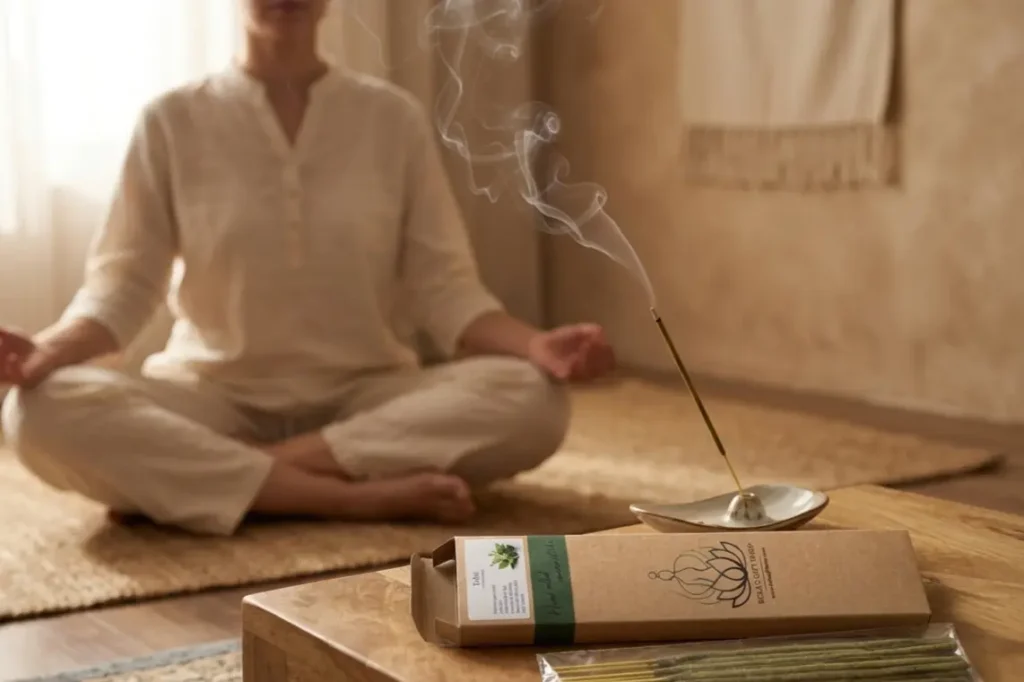
The meditation incense benefits most people notice aren’t placebo. They’re the olfactory-limbic pathway doing what it was built to do.
Air Purification: What the Science Actually Supports
Eugenol, the primary compound released when tulsi burns, has documented antimicrobial and antifungal properties. This isn’t folk belief. It’s been confirmed in laboratory studies. Whether the concentrations reached through burning incense are clinically significant for air purification is a separate question, and an honest one.
What we can say with confidence is this: historically, tulsi incense was used in India during illness, monsoon season and post-birth recovery specifically because of these properties. Families burned it in sick rooms. Near newborns. When the air felt heavy. Generations of practical use don’t prove mechanism, but they’re not nothing either.
The herbal incense benefits for the home environment are real within reasonable expectations. Tulsi smoke is not an air purifier. But in a well-ventilated room, as part of a broader wellness environment, burning it regularly contributes to a cleaner, calmer atmosphere. That’s a defensible claim. We don’t make claims we can’t stand behind.
Vastu Benefits and Daily Ritual Use
Vastu Shastra, India’s ancient spatial harmony system related to but distinct from Feng Shui, places specific significance on where and when you burn particular fragrances. Tulsi is one of the most recommended Vastu botanicals for the home.
The northeast corner of a home is considered the zone of mental clarity, positive energy and prosperity in Vastu principles. Burning tulsi incense sticks in this area is said to activate and sustain those qualities. We’re not in the business of telling you what to believe spiritually. But if you already practice any form of space-clearing or intentional environment work, this is a well-documented traditional application.
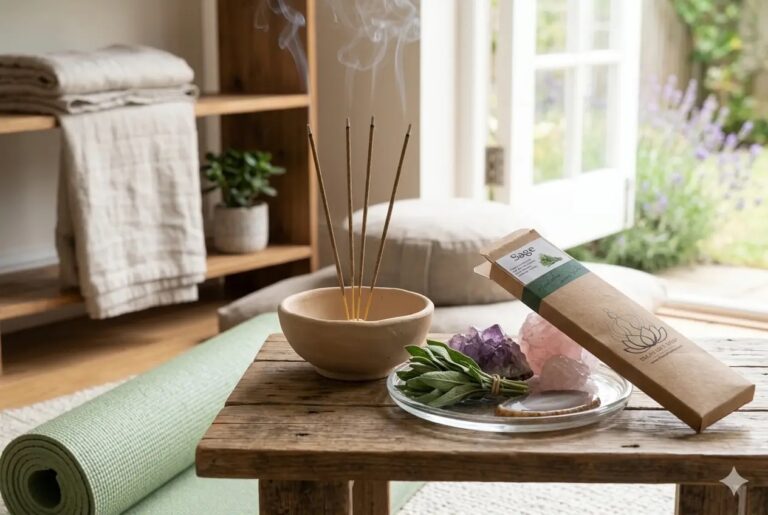
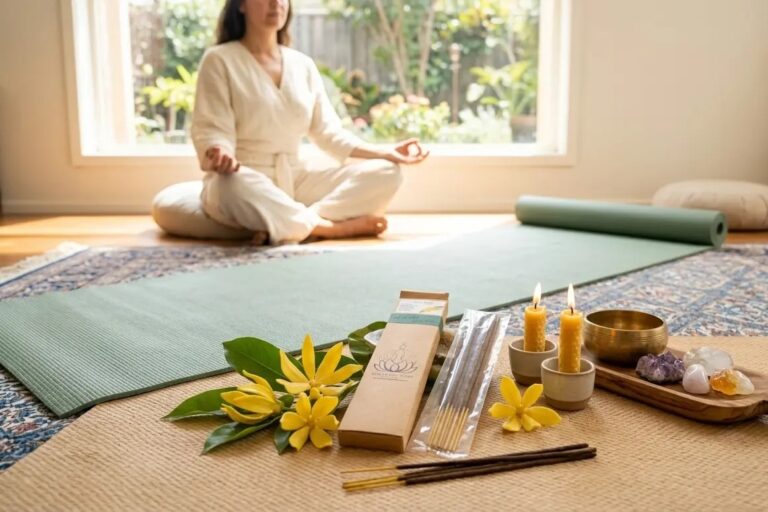
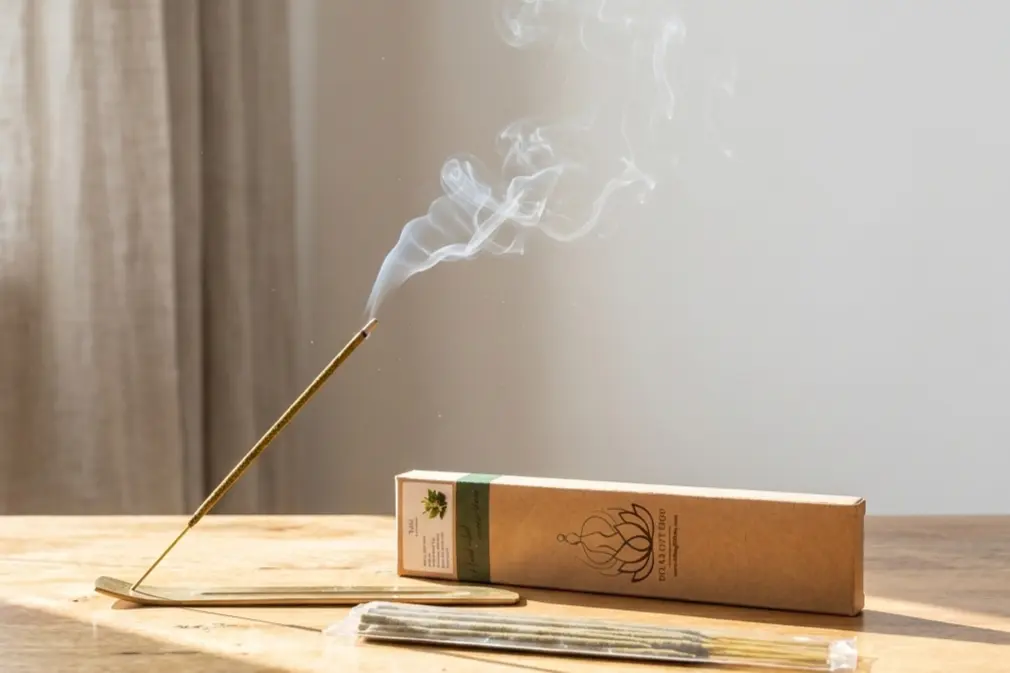
On timing: the two most effective sessions we’ve found in practice are morning, ideally before screens or work begins, and evening, about an hour before sleep. Morning use sets a calm, focused tone. Evening use helps the body begin its shift toward rest. Both sessions together take under fifteen minutes. The cumulative effect over weeks is genuinely noticeable. Not dramatic, but consistent.
Hand-Rolled vs. Dipped: A Real Difference
This is the part most buyers never ask about. We think it’s one of the most important distinctions in the category.
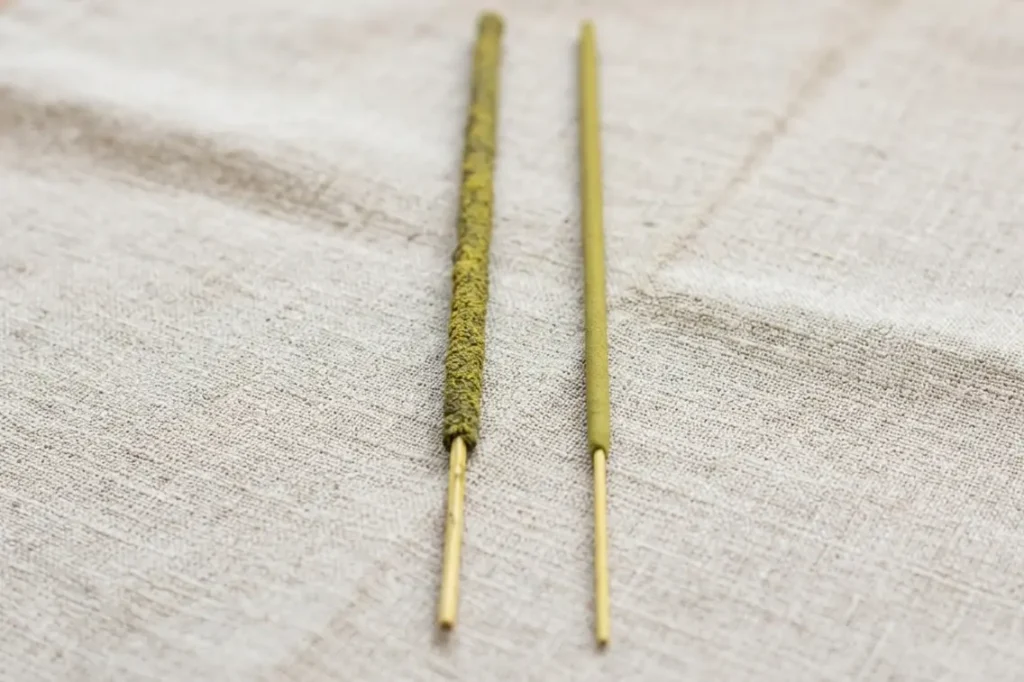
The majority of tulsi incense on the market is made by taking a bamboo stick coated in wood powder, drying it, then dipping the finished stick in synthetic tulsi fragrance oil. The scent can be pleasant. But synthetic fragrance oil is not tulsi. It is a chemical approximation, engineered to smell like the plant, carrying none of the bioactive compounds.
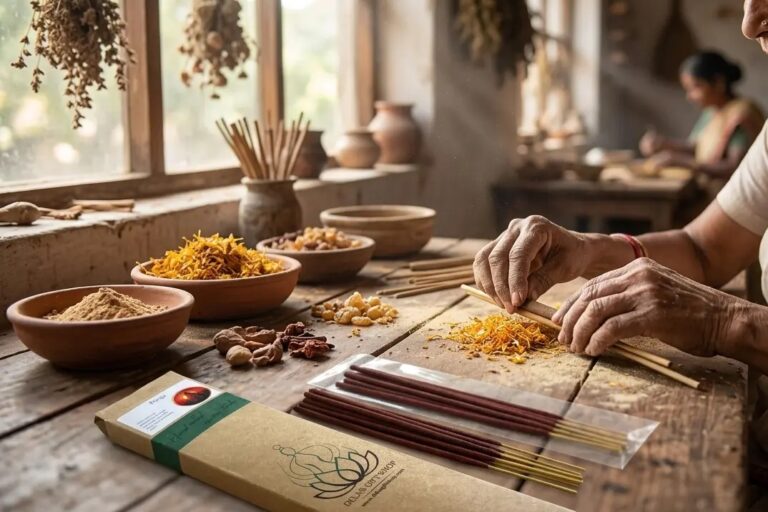
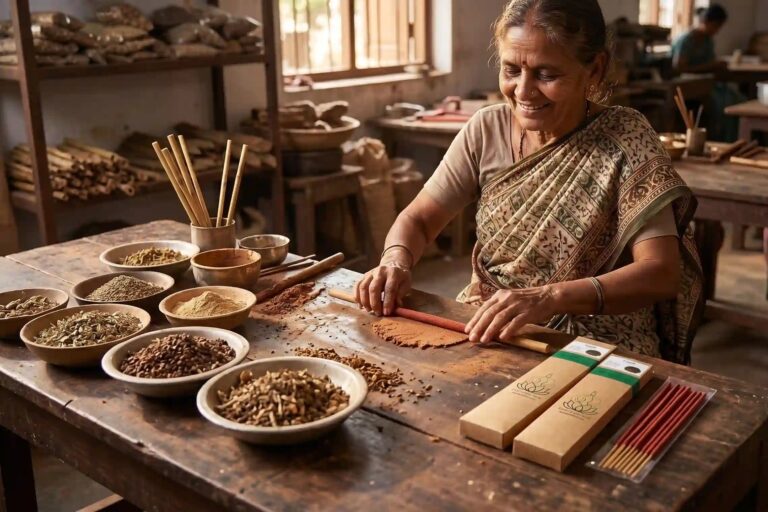
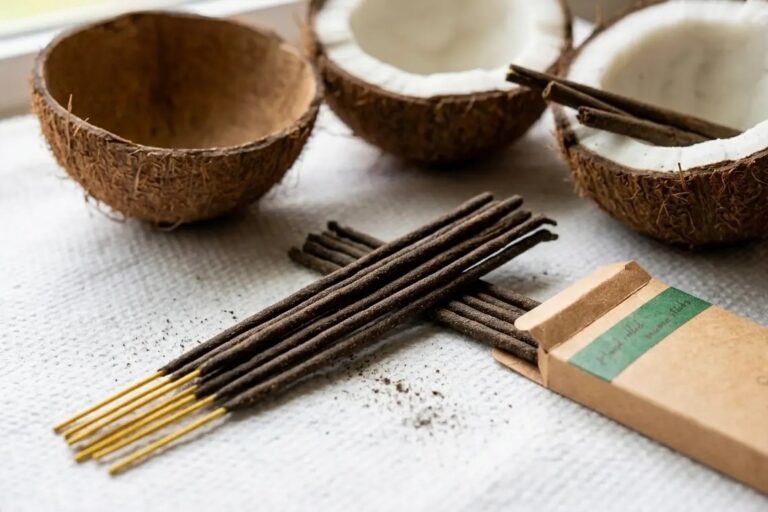
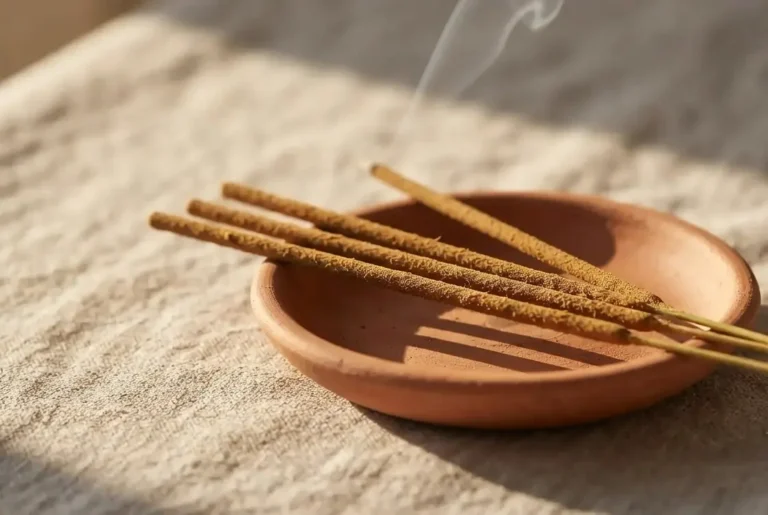
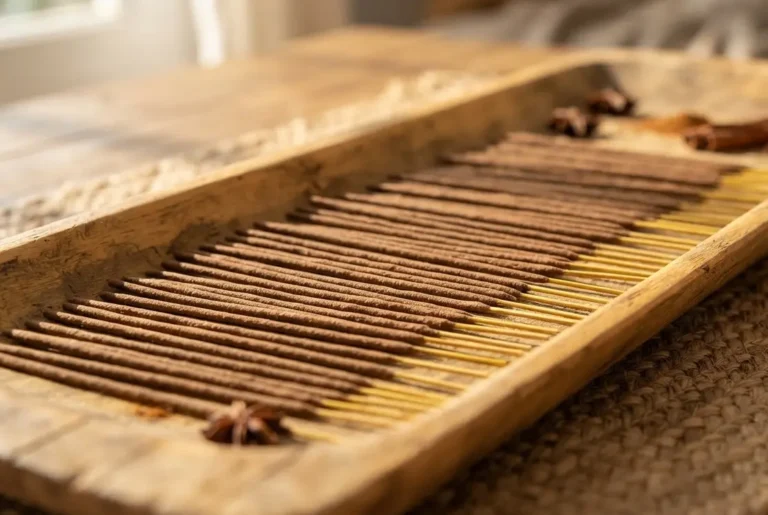
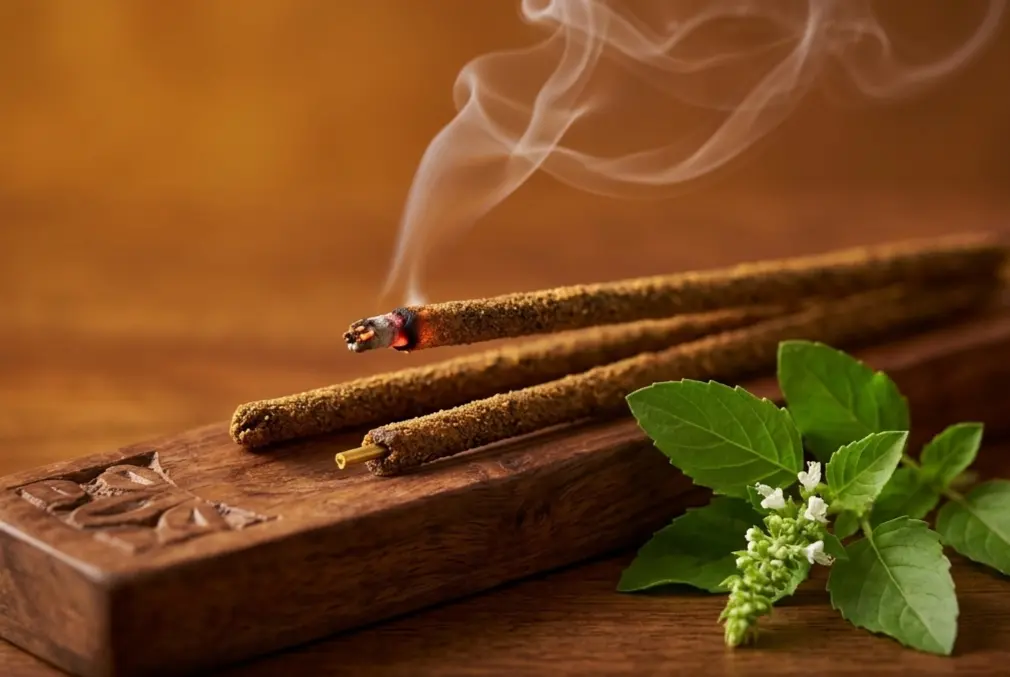
Hand-rolled sticks made with actual tulsi extract and natural binders such as jiggit, a tree bark gum, burn slower, produce thinner smoke, and smell like the real plant. Greener, earthier, slightly peppery, with a faint medicinal quality. That’s the eugenol. That’s what you actually want.
The benefits of tulsi incense in terms of stress response, air chemistry and spiritual fragrance integrity all depend on the botanical material being present. A stick that smells generically herbal from synthetic fragrance will not deliver what you’re looking for.
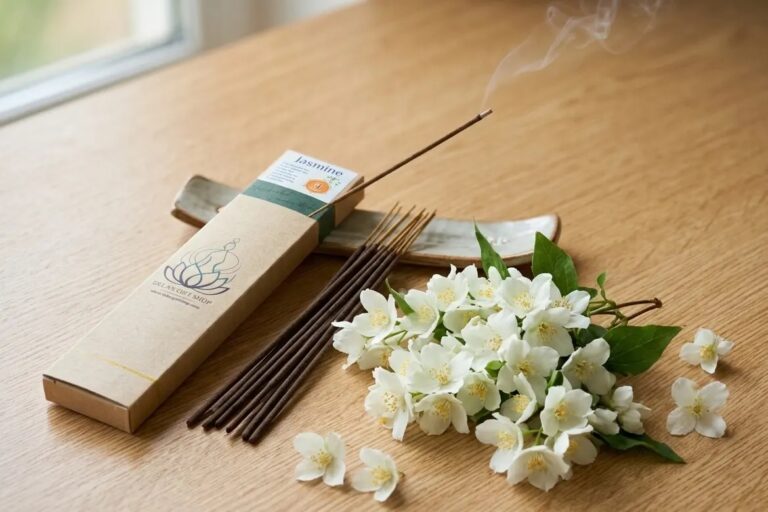
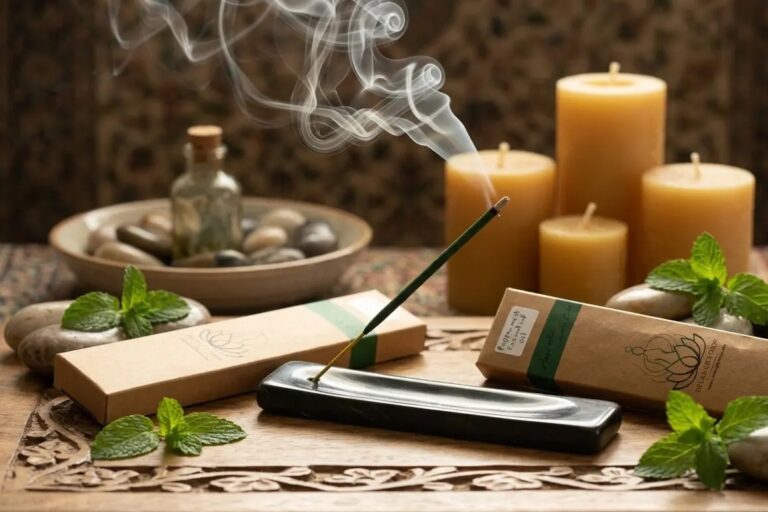
At Dela’s Gift Shop, every stick we stock is made with natural ingredients, not synthetic dips. We use them ourselves and we wouldn’t sell anything we wouldn’t light in our own space. Browse the full incense collection at https://delasgiftshop.com/products/#incense or explore our featured products at https://delasgiftshop.com/featured-products/ if you’re not sure where to start.
When Not to Burn It
We include this because almost no competitor does. And it’s exactly the kind of honest information that builds trust.
Tulsi incense is safe for most adults in well-ventilated spaces. But there are specific circumstances to be careful about.
Don’t burn it in sealed rooms. Any smoke, however natural, becomes an irritant in concentration. Always crack a window. If you have asthma or reactive airways, start with very short sessions in airy spaces and pay attention to how your body responds. During pregnancy, consult a midwife or healthcare provider before regular use. Some volatile compounds in high concentrations are not recommended. Keep burning sticks away from very young children and pets.
These aren’t warnings meant to alarm. They’re what responsible use looks like.
Ready to Start Your Tulsi Ritual?
One stick in the morning. One in the evening. Five minutes each. The tulsi incense sticks benefits are cumulative. They build with the habit. At Dela’s Gift Shop, our hand-rolled incense is crafted with real botanical ingredients, not synthetic fragrance. What you burn matters. So does where it comes from.
Visit us and explore the full range
Browse our spiritual and wellbeing collection
Discover our featured products
Frequently Asked Questions
What are tulsi incense sticks benefits for the mind?
Tulsi incense supports mental clarity and stress reduction via the olfactory-limbic pathway. When burned, eugenol molecules are inhaled and interact directly with the brain’s emotional regulation centres. Regular use builds stress resilience over time and supports the parasympathetic nervous system, shifting the body from alert toward calm.
Does burning tulsi incense sticks purify the air?
Eugenol, tulsi’s primary volatile compound, has documented antimicrobial and antifungal properties. When burned, these compounds are introduced into the air. The effect is not equivalent to a medical air purifier, but regular use in well-ventilated spaces contributes to a cleaner home environment. Historically, tulsi incense was burned specifically in sick rooms and post-birth spaces for this reason.
How often should I burn tulsi incense sticks for stress relief?
Daily use in well-ventilated spaces is safe and most effective. Morning and evening sessions of fifteen to twenty minutes each are the practical standard. Consistency matters more than duration. The nervous system responds to repeated signals, not single large doses. Even one stick a day builds cumulative benefit.
What are the spiritual benefits of tulsi incense sticks?
In Hindu tradition, tulsi is considered a divine manifestation and is closely associated with Lord Vishnu and Lord Krishna. Burning tulsi incense is believed to invite divine presence, clear negative energy and elevate the spiritual environment of a home. Vastu Shastra recommends burning it in the northeast corner for clarity and prosperity.
Are hand-rolled tulsi incense sticks better than regular ones?
Yes, for therapeutic and aromatic purposes. Hand-rolled sticks made with real tulsi extract and natural binders contain the actual bioactive compounds responsible for stress relief, air-purifying properties and genuine fragrance. Synthetic, dip-fragrance sticks smell similar but carry none of the botanical material. If the benefits matter to you, botanical ingredient quality is non-negotiable.
Author Bio
This article was written by the team at Dela’s Gift Shop, a UK-based handcrafted wellness and gifting store. We source, test and use everything we sell. Our incense is made with real botanical ingredients, not synthetic fragrance. Everything we write is based on what we have actually experienced working with these products. Visit us at https://delasgiftshop.com